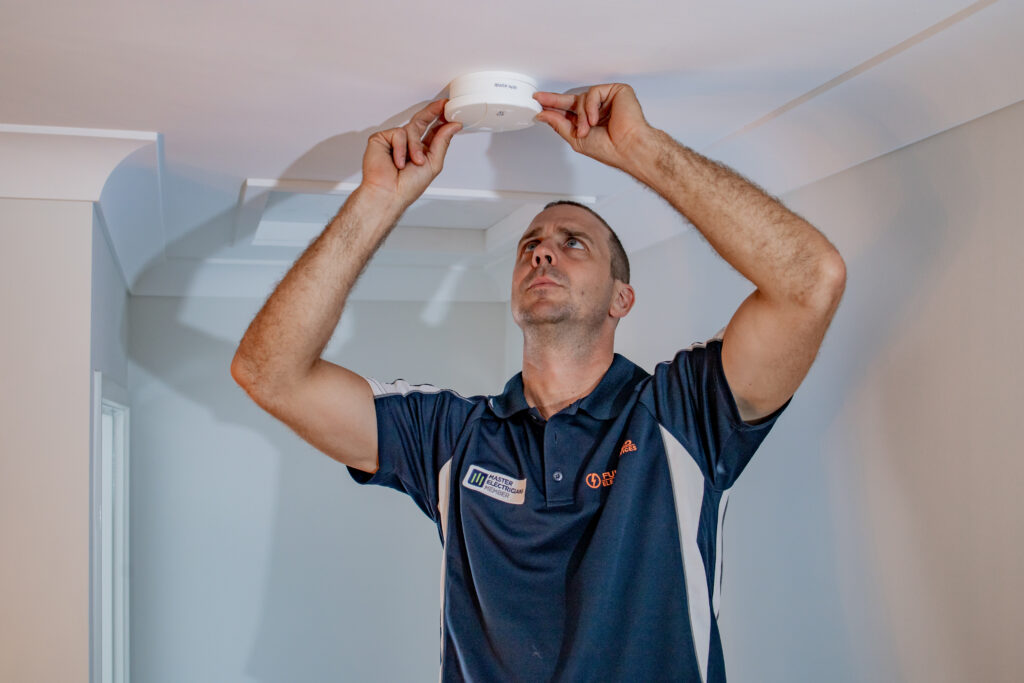
From 1 January 2027, every home in Queensland must have photoelectric, interconnected smoke alarms in every bedroom, in the hallways that connect bedrooms and on every storey. That includes owner-occupied homes, which until now have been outside the rules. If you own, rent out or are about to sell a home in Brisbane, this guide explains exactly what the law requires, what changes on 1 January 2027 and how to get your home compliant before the end-of-year rush.
Not sure where your home stands? Our smoke alarm installation team can assess your home and give you a fixed price before any work starts.
The three stages of Queensland’s smoke alarm law
Queensland’s smoke alarm legislation was introduced in stages over ten years. The final stage takes effect on 1 January 2027.
- Since 1 January 2017: new homes and homes undergoing substantial renovation must have compliant alarms.
- Since 1 January 2022: homes that are sold, or leased under a new or renewed tenancy, must have compliant alarms.
- From 1 January 2027: all other Queensland homes, including owner-occupied homes, must have compliant alarms.
What a compliant smoke alarm system looks like
To comply, the smoke alarms in your home must be:
- Photoelectric and compliant with Australian Standard AS 3786:2014. Ionisation alarms do not count, and a home cannot have ionisation alarms in place of photoelectric ones.
- Hardwired to the mains power or powered by a 10-year non-removable battery. Existing hardwired alarms must be replaced with hardwired alarms.
- Interconnected, so that when one alarm sounds, every alarm in the home sounds. Interconnection can be hardwired or wireless.
- Less than 10 years old, and replaced sooner if they fail when tested.
Where smoke alarms must be installed
Alarms must be installed on every storey of the home, including storeys without bedrooms, and:
- in every bedroom;
- in hallways that connect bedrooms to the rest of the home;
- if there is no hallway, between the bedroom area and the rest of that storey;
- on any storey without bedrooms, in the most likely path of travel to leave the home.
There are also rules about placement. Alarms should not be installed within 300 mm of a corner or light fitting, within 400 mm of an air-conditioning vent, or within 400 mm of ceiling fan blades. Kitchens and bathrooms are usually avoided because cooking and steam cause false alarms. A licensed electrician will plan the layout so every alarm meets these clearances.
What homeowners need to do before 1 January 2027
If you live in your own home and have not upgraded yet, the steps are simple:
- Check your existing alarms. Look at the label on each alarm for the type (photoelectric or ionisation) and the manufacture date. Anything ionisation, older than 10 years or not interconnected needs to be replaced.
- Count the rooms. Count your bedrooms, the hallways that serve them and the storeys in your home. This gives you the number of alarms you need.
- Choose hardwired or 10-year battery. If your home already has hardwired alarms, they must be replaced with hardwired alarms. Otherwise, 10-year lithium alarms with wireless interconnection are a fast, tidy option.
- Book early. Electricians across Brisbane are already busy with smoke alarm upgrades, and December is the busiest month of the year.
What landlords need to do
Rental properties have had to comply at every new lease or lease renewal since 1 January 2022. Landlords must also test and clean every smoke alarm within 30 days before a tenancy starts or is renewed, and replace any alarm that is nearing the end of its life or fails testing. If your rental property is still running on old alarms because the same tenants have stayed on, now is the time to upgrade it between inspections.
What sellers need to do
A home sold in Queensland must meet the smoke alarm requirements before settlement. The seller declares whether the home complies on the property transfer form (Form 24). If you are planning to sell, book the upgrade well before settlement so your conveyancer has everything they need.
Hardwired or 10-year battery: which is right for you?
Both options are compliant. Hardwired alarms run from your mains power with a backup battery and are the only option if your home already has hardwired alarms. Ten-year lithium alarms with wireless interconnection are often quicker to install in homes with no existing wiring, with minimal disruption to ceilings and roof space. We explain the options on site and recommend the one that suits your home and budget.
Get compliant before the deadline
Fully Wired’s licensed electricians install photoelectric, interconnected smoke alarms across Brisbane, usually in a single visit, and provide a compliance certificate when the job is done. Book your smoke alarm upgrade or call 1300 385 599 for a fixed-price quote.
Want to know what to look for in a new alarm? Read our guide to the top 5 things to look for in a smoke alarm.
Frequently asked questions
Do owner-occupiers really have to upgrade by 1 January 2027?
Yes. From 1 January 2027, the smoke alarm requirements apply to every Queensland home, including homes lived in by their owners.
How many smoke alarms does my home need?
At least one in every bedroom, one in each hallway that connects bedrooms to the rest of the home, and at least one on every storey. A typical three-bedroom, single-storey home needs four or five alarms.
Can I keep my existing smoke alarms?
Only if they are photoelectric, less than 10 years old, interconnected with every other alarm and installed in all the required locations. Most homes with older alarms need some or all of them replaced.
Are wireless interconnected smoke alarms compliant?
Yes. Wireless interconnection is compliant, as long as the alarms are photoelectric and powered by mains power or a 10-year non-removable battery. Existing hardwired alarms must be replaced with hardwired alarms.
How long does a smoke alarm upgrade take?
Most homes are completed in a single visit of a few hours, depending on the number of alarms and the ceiling access.