
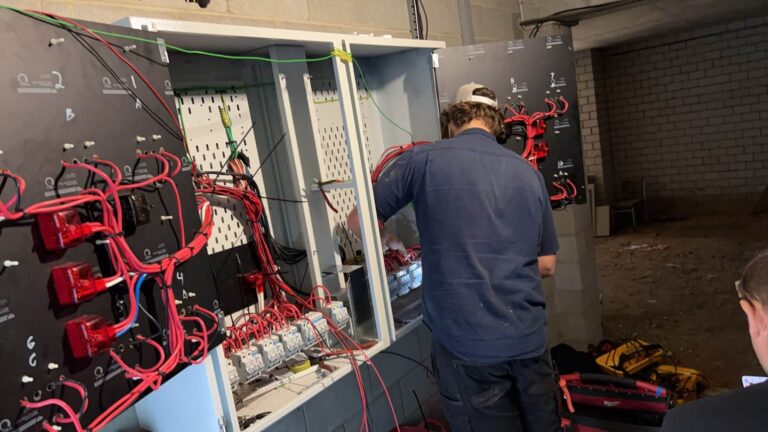
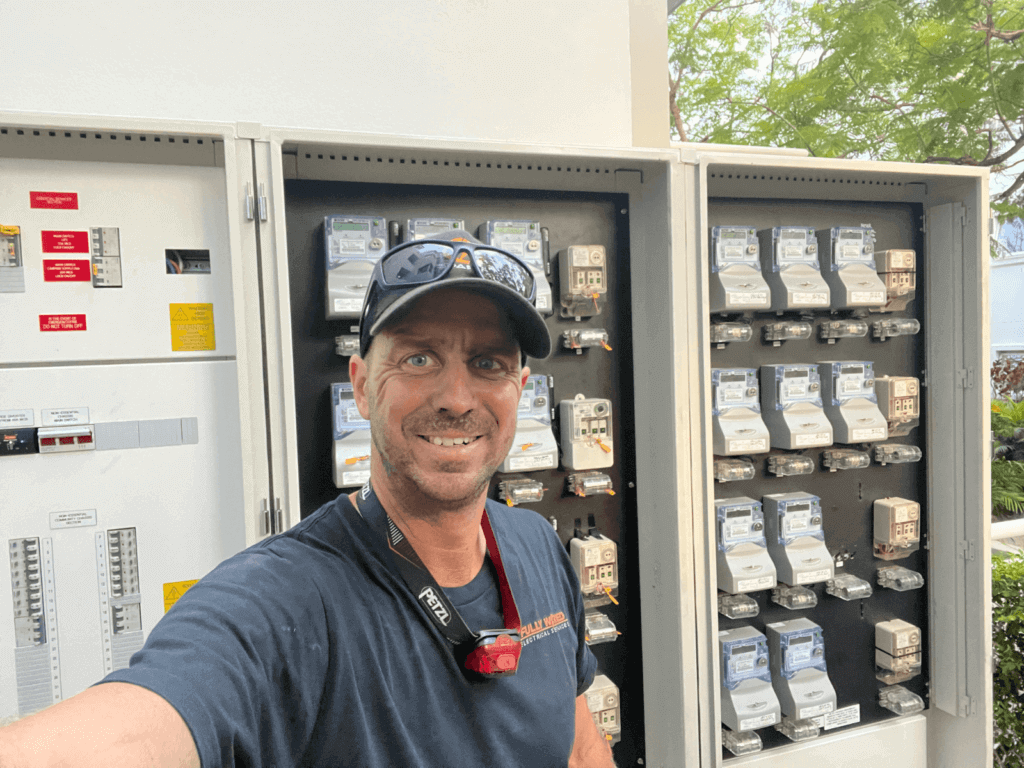
Taringa · 10 units
Safety switches on every required circuit
A poor-condition main board was replaced with a lockable metal board, fuses became circuit breakers and safety switches were added to all required circuits, including tenancy circuits.
A safety switch watches the current flowing through a circuit and cuts the power in a fraction of a second if it detects electricity leaking to earth, for example through a person. Fuses and ordinary circuit breakers cannot do that. If your home has no safety switches, or only one covering everything, it is time to upgrade.

Send us a few details and we will arrange a licensed electrician to inspect your switchboard, test your safety switches and give you a fixed price for any work required.
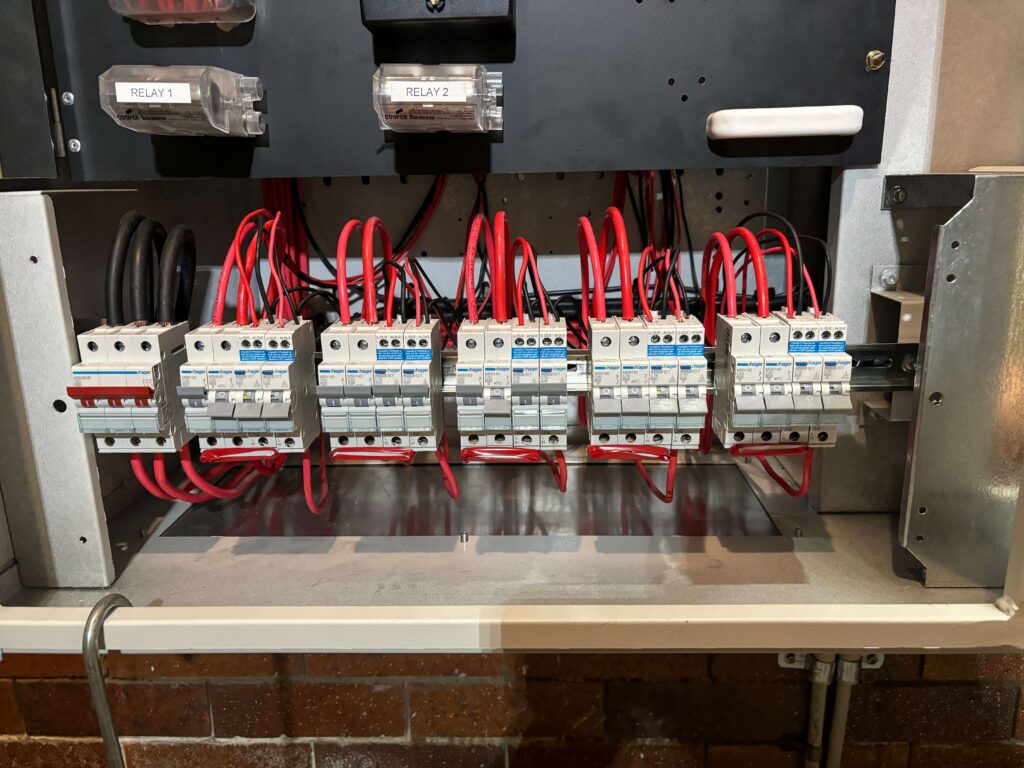
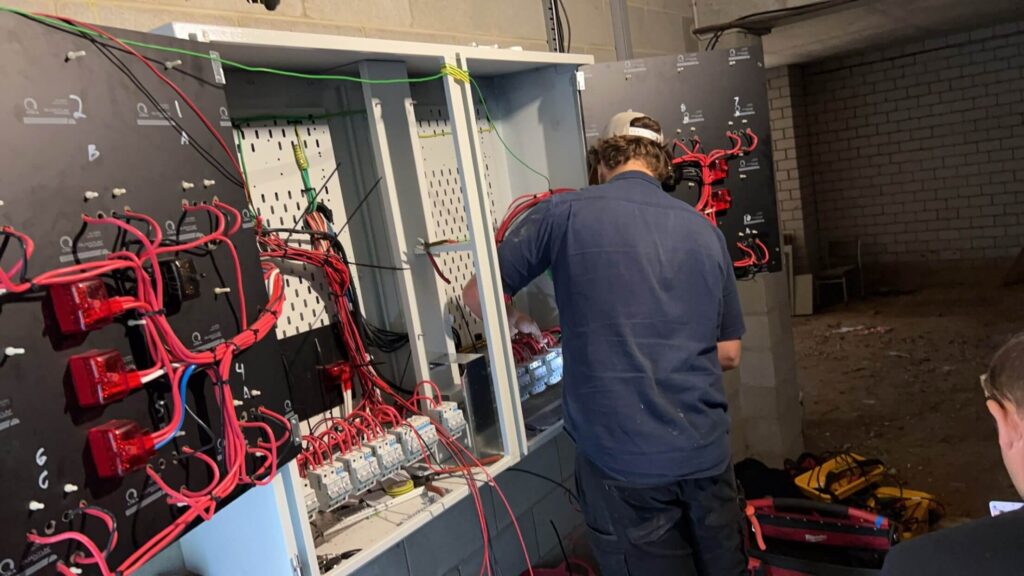
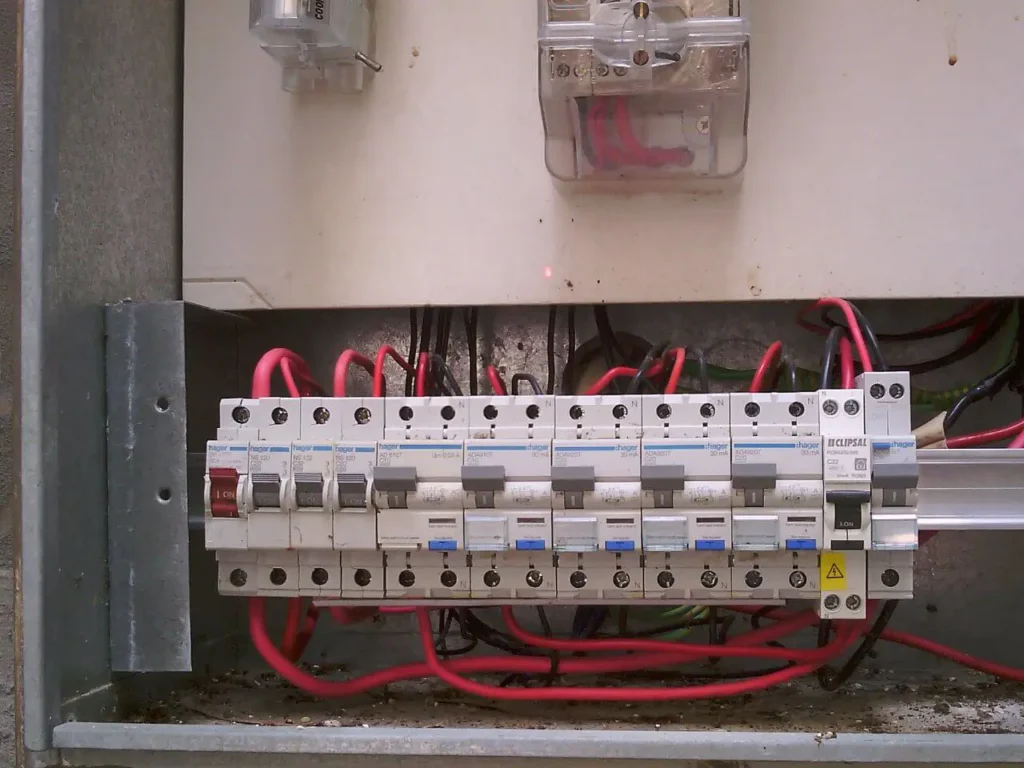
A fuse or circuit breaker only reacts to overloads and short circuits. Those protect the wiring from overheating, but they will not stop a shock. That is why modern homes need both.
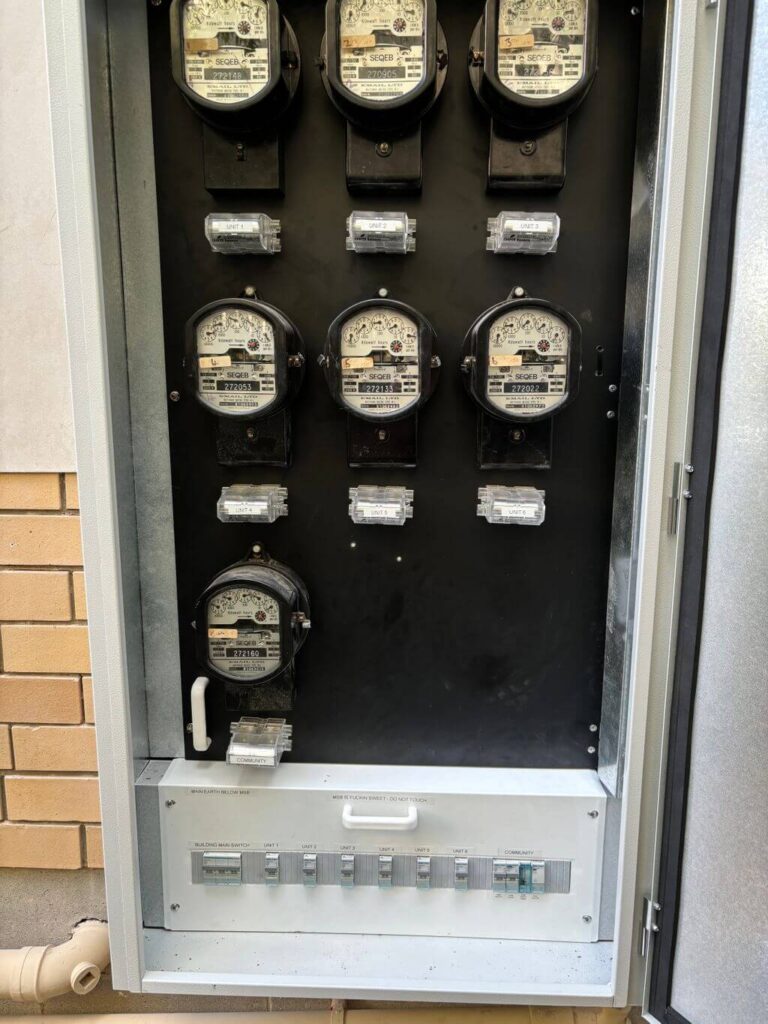
Four devices with very different jobs. This is what each one protects, and why we usually recommend RCBOs in new and upgraded boards.
| Device | Protects against overload | Protects people from shock | When a fault happens |
|---|---|---|---|
| Ceramic fuse | Yes (when correctly rated) | No | The fuse wire melts and must be rewired by hand |
| Circuit breaker (MCB) | Yes | No | Trips and resets, protecting the cable only |
| Safety switch (RCD) | No | Yes | Cuts every circuit it covers, often several at once |
| RCBO (combined) | Yes | Yes | Cuts only the faulty circuit, and the rest of the home stays on |

Queensland has required safety switches on power point circuits in new homes since 1992. Many homes built earlier still have none.
New domestic installations need RCD protection on final subcircuits including power and lighting, with no more than three circuits on each RCD.
Residential rental properties in Queensland must have an approved safety switch protecting the power point circuits.
When a home is sold, the contract must state whether a safety switch protects the power circuits. If not, the buyer must have one installed within three months of settlement.
These rules set the minimum. For real protection, we recommend safety switch coverage on every circuit, including lighting, air conditioning, the oven and hot water.

A safety switch is a mechanical device. If it is never tested, it can stick. Queensland safety authorities recommend pressing the test button every three months.
Body corporates and businesses also need periodic RCD testing for compliance. See our test and tag and compliance services.
Kettles, heaters, fridges and pool pumps are common culprits. Unplug everything and reset to narrow it down.
Rain in outdoor power points, garden lights or a damp roof space often trips RCDs after storms.
Deteriorated cable insulation leaks current. It needs insulation testing to find.
Normal small leakages add up. Spreading circuits across more RCDs or RCBOs fixes it.
Safety switches wear out. One that trips for no reason may need replacing.
Cracked power points, light fittings or cords can leak to earth.
Heating elements can break down and leak current long before they fail completely.
Some inverters, chargers and appliances need a specific RCD type to work reliably.
Never bypass or tape over a safety switch that keeps tripping. It is warning you about a real fault. Call us to find it.
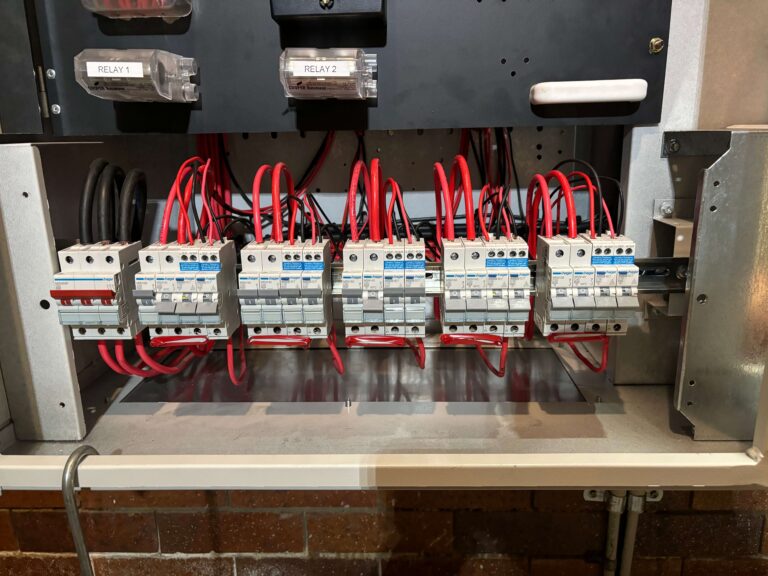
A poor-condition main board was replaced with a lockable metal board, fuses became circuit breakers and safety switches were added to all required circuits, including tenancy circuits.
A compliance inspection found no safety switch on the community lighting, faded labels and no spare capacity. The upgrade fixed all three.
Fuses were upgraded to circuit breakers, safety switches were installed on all required circuits, meter disconnect links were fitted and the main earth was upgraded to AS3000.
The FW team member honestly talked me through all the options and requirements of the work.
★★★★★Andrew Martin, Google review
Thank you again for doing a wonderful job with all our electrical work. You guys are so reliable and very professional.
★★★★★Kathy Robertson, Google review
Current standards call for RCD protection on every final subcircuit, with no more than three circuits per RCD. A typical home needs at least two to four RCDs, or individual RCBOs on each circuit.
If your board has space and modern breakers, adding RCDs or RCBOs can be straightforward. Fuse boards and full boards usually need a switchboard upgrade. We quote a fixed price after checking your board.
It is better than none, but one RCD covering everything means any fault blacks out the whole home, and it may not meet current standards for new work. Splitting circuits across several devices is safer and more convenient.
Plug-in safety switches protect only what is plugged into them. They are useful on worksites, but they do not replace switchboard protection for your home’s circuits.
Water is getting into something electrical, often an outdoor power point, garden light, junction box or roof space. We can find and fix the entry point.
Rental homes in Queensland need an approved safety switch on the power point circuits. We can check, install and document it, and do smoke alarm compliance in the same visit.
Call 1300 385 599 (Mon to Fri, 8:00am to 4:30pm) or book online. We will check every circuit, test your existing safety switches and give you a fixed price for any upgrade.
Select a service that you're interested in
View all services
Electrical Contractors Licence: 68822
Work Cover Queensland: WAD081103497
Public Liability Cover: 15T1289166

Professional Indemnity: 9009193PIN
Security Firm Licence (Class 2): 4412581
© 2026 Fully Wired Electrical Services


